


Home page
News
Albums
History
Musicians
Work in progress
FAQ
Ordering
Contacts
UPCOMING GIG
Saturday 6 March 2027
East Peckham Methodist Church
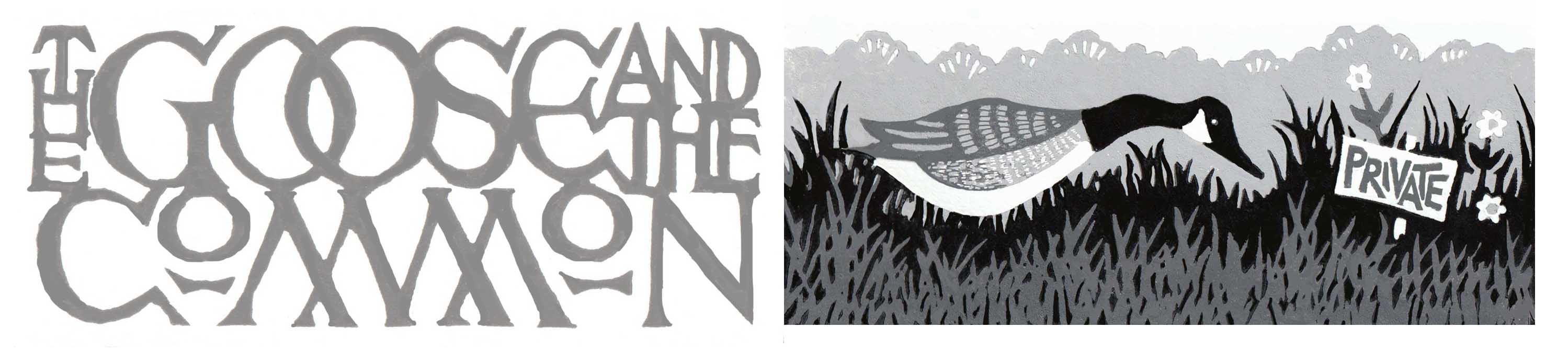
In the first weekend of September the band completed our second performance at Leith Hill Place, a National Trust property. Each year the house has a different theme as a focus for its various art, poetry and music projects and this year the subject was ‘Landscape and Enclosure’. One artwork, displayed in the Terrace Room where we performed, was a triptych that included ‘The Goose and the Commons’, an anonymous poem that commented on the social injustice resulting from the passing of the various Enclosure Acts which gradually took away areas of waste and common land, depriving commoners of their traditional rights of access and usage. Between 1604 and 1914 Parliament enacted over 5200 Enclosure Bills which privatised around a fifth of England. The poem depicted in the triptych was taken from an edition of the Tickler Magazine published in February 1821.
Bruce challenged me to compose a setting for the poem and I have tried my best for this month’s ‘Folk Song of the Month’. On undertaking further research I found that the poem dates back to the mid 18th century and that being orally transmitted, over time, it has accrued a number of variations and I came across another set of words, different from those published in the Tickler Magazine apart from the first verse. For my composition I have picked what I thought were the best couplets from both versions and added a final couple of lines of my own at the end. For the tune, the metre of the poem put me in mind of the loud rebellious songs of the 17th century around the time of English Civil War and which also fits in with the anger that would have followed the first Enclosure Act of 1604. Here is my rough demo for ‘The Goose and the Common’.
Continuing with the theme of geese, before the change to the calendar in 1752, the 10th of October was the old date for Michaelmas and the traditional time for goose-eating in England. Many goose fairs were held around this time and two ancient fairs are still going strong. On the first Wednesday of the month is the Nottingham Goose Fair and it was called a ‘goose fair’ as early as 1541. On the second Wednesday, in Devon, is the Tavistock Goosie Fair which dates back to the 16th Century. With both of these fairs, over the years, the actual goose selling and goose-eating has died out to be replaced with the pleasure fairs that we are more accustomed to these days. The appearance of actual geese at these fairs is likely to prompt an article in the local paper. Still the names persist and attract many visitors each year.
The 10th of October is, according to the journal Folk Lore in 1909, the last date to gather or eat blackberries, as after this date ‘the Devil puts his paw on them’. So be warned!
(My thanks in research to the excellent book The English Year by the folklorist Steve Roud.)
All text, images and music samples on this site are copyright © Childe Rolande.
September
August
July
June
May
April
March
February
January
2025
December
November
October
September
August

Poster for Lucy Anna Martin
(click to watch the video)